
TREE PRUNING
At Total Tree Care we undertake all aspects of tree pruning and reduction for residential and commercial customers across West Sussex and Surrey. This can be as part of regular maintenance carried out on the trees on your property or removing dead and dangerous branches present a threat of falling.
Our highly skilled team of industry professionals will work safely and responsibly regardless of the size of project. Here’s a summary of the typical tree pruning and tree reduction services we provide.


CROWN REDUCTION & SHAPING
Tree reduction and shaping is a method in which the crown is decreased in size. This should be tackled so that the tree maintains its natural form, with substantial, healthy growth points. The most fundimental part of any tree target pruning is the finishing/pruning cut!
Occassionally trees need to be manipulated (shaped) to promote a well-balanced crown, this should be achieved without mutilating the trees natural form.
How does tree reduction benefit us?
- It is an effective way of maintaining a healthy tree and encorages beneficial re-growth.
- It can temporarily resolve sunlight issues, however, be aware that once the tree puts on re-growth the crown will become denser.
- It decreases the end-weight of main scaffold branch work, reducing the risk of limb failure/loss.
- It decreases the ‘sail effect’ upon the tree and its root system, preventing tree failure.
The optimum percentage that should be removed from branch length (reduced) is 30%, however, this measurement will normally be specified in metric terms.
CROWN THINNING
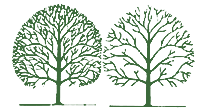
Crown thinning is a method in which the crown density is decreased by removing selected small diameter branch work. Thinning operations target mainly the interior growth (centeral 1/3), but can be focused on the extremities if necassery. Thinning specifications are usually provided as a percentage removed.
What are the benefits of crown thinnning?
- It is the most effective way of resolving sunlight issues, as it allows dappled light to pass through the crown. With little re-growth developing from the pruning cuts, the crown density remains low, unlike the response from a crown reduction.
- It decreases the ‘sail effect’ upon the tree and its root system, preventing tree failure.
- Most trees benefit from increased air circulation within the crown, Apple trees being a good example of this.
It is important that trees are not over thinned as this may lead to an increased risk of disease, and potential limb failure, as remaining limbs are left exposed (Lions tailing).

CROWN LIFTING
Crown lifting is the method used to remove of selected lateral branches from the lower part of the crown, meaning that the overall height of the crown is lifted.
The benefits:
- Convenient method for use around driveways and property, creating more suitable access around the trees vicinity.
- Public highways and footpaths have legal specifications for height clearence from trees.
- Can be used to clear telephone and power lines.
- Prevents a nasty bump on the head!

DEADWOOD & HAZARDOUS
LIMB REMOVAL
Year in year out a trees growth continues, from a young sapling through to maturity and even into their veteran stages. During this life cycle cativites and wounds are imminent, with deadwood forming and die-back occuring at furthest extremities. As a tree reaches the veteran stages of its lifespan, limb failure will occur as it begins to ‘grow down’. Trees can also become hazardous due to storm damage, pests and diseases. It is for these reasons that it may be necessary to remove hazardous/ dead branches and limbs, especially in areas used frequently by members of the public.
We are equiped to take care of these situations by removing hazardous branch work and undertaking visual tree inspections, checking for further potential weaknesses or hazards within the tree.
However, deadwood does have its benefits, it creates the perfect habitat for native birds, insects and animals. So, its best only to have it removed if absolutely necessary.





Tree Pruning FAQs
What is tree pruning and why is it important?
Tree pruning is the process of removing dead, diseased, or damaged branches from a tree to promote healthy growth and improve the tree’s overall appearance. It is important for maintaining the safety and health of the tree, as well as for preventing damage to nearby buildings or power lines.
If you have any further questions about tree pruning please call Total Tree Care on 01403 342060.
How often should a tree be pruned?
The frequency of tree pruning depends on the species of tree and the specific needs of the tree. Generally, most trees should be pruned every 3-5 years, but some trees may need to be pruned more frequently.
If you have any further questions about tree pruning please call Total Tree Care on 01403 342060.
What are the different types of tree pruning?
There are several types of tree pruning, including crown cleaning, crown thinning, crown raising, and crown reduction. Crown cleaning involves removing dead or diseased branches, while crown thinning involves removing branches to increase light penetration and air circulation. Crown raising involves removing lower branches to increase clearance, and crown reduction involves removing branches to reduce the overall size of the tree.
If you have any further questions about tree pruning please call Total Tree Care on 01403 342060.
Can I prune my own tree or should I hire a professional?
While it is possible to prune your own tree, it is recommended to hire a certified arborist for larger or more complex pruning jobs. They have the knowledge, tools, and experience to prune the tree safely and correctly.
If you have any further questions about tree pruning call Total Tree Care on 01403 342060.
What tools do I need to prune a tree?
The tools needed for tree pruning include a pair of sharp, high-quality pruning shears, a handsaw, a pruning saw, and a pole pruner or chainsaw (if needed for larger branches).
If you have any further questions about tree pruning please call Total Tree Care on 01403 342060.
What are the best times of year to prune a tree?
The best time to prune a tree depends on the species of tree. Many trees should be pruned while they are dormant, typically in late fall or winter. Other trees, such as oak and maple, should be pruned during the dormant season to avoid the spread of disease.
If you have any further questions about tree pruning please call Total Tree Care on 01403 342060.
How do I know if a tree needs to be pruned?
Signs that a tree may need to be pruned include dead or diseased branches, branches that are crossing or rubbing against each other, branches that are too close to power lines or buildings, and branches that are blocking sunlight or blocking views.
If you have any further questions about tree pruning please call Total Tree Care on 01403 342060.
Can pruning a tree make it grow taller? No, pruning a tree will not make it grow taller. However, properly pruning a tree can help promote healthy growth and improve the overall appearance of the tree.
If you have any further questions about tree pruning please call Total Tree Care on 01403 342060.
Can pruning a tree harm it?
If done improperly, tree pruning can harm or even kill a tree. It is important to hire a certified arborist or follow proper pruning techniques to avoid damaging the tree.
If you have any further questions about tree pruning in please call Total Tree Care on 01403 342060.
Is there a difference between pruning a tree and trimming a tree?
While the terms “pruning” and “trimming” are often used interchangeably, there is a difference between the two. Tree pruning involves removing dead, diseased, or damaged branches to promote healthy growth, while tree trimming typically refers to removing branches to shape or control the overall size of the tree.
If you have any further questions about tree pruning please call Total Tree Care on 01403 342060.